Accessibility & Luggage
Seoul Subway Lockers: Check the Bag, Price and Pickup Time
A bag-free walk sounds good until you have to cross town to collect your things. Check the locker and your return plan before you pay.
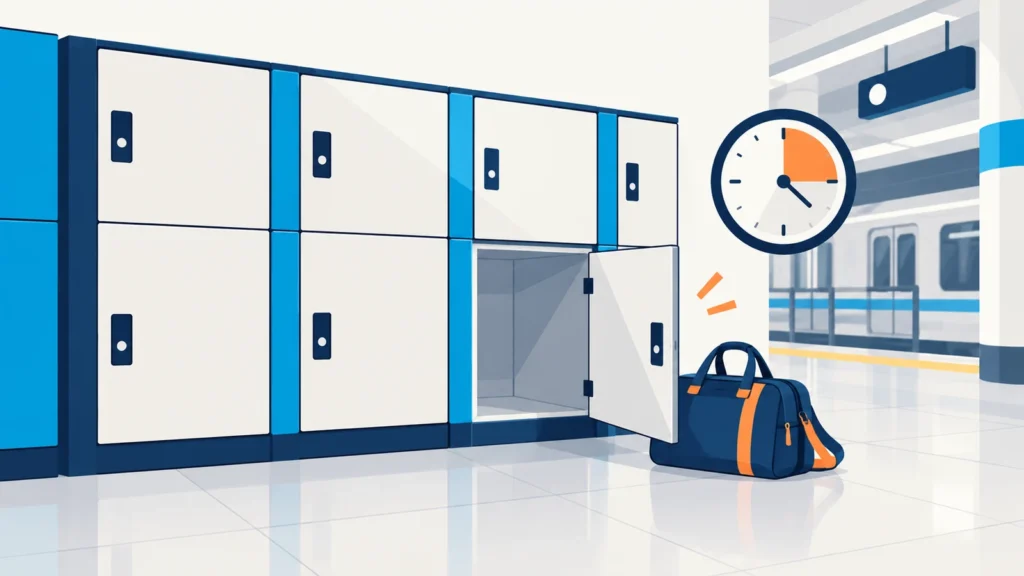
Before leaving a bag in a Seoul subway locker, confirm the exact station and locker location, usable space, total price and collection deadline. Keep the phone or access information needed to retrieve it with you. Plan your route back to the bag as well as your route out.
Choose storage around your return journey
A locker can be useful when you have a bag from work or shopping but still want a short walk and café stop. It also adds a return stop. A convenient place to leave a bag may be inconvenient to revisit after dinner.
Before paying, ask yourself: am I returning to this station, or ending somewhere else? If the outing finishes across town, compare the extra journey with carrying a smaller bag. Do not choose storage simply because you passed an empty compartment.
Check the actual locker, not just the station
T-Locker is a subway storage service. Its official site describes checking available compartments through the app before visiting the lockers. Availability is a current check, not something a route guide or old station photo can guarantee.
Find the correct station and the particular locker bank. Note the concourse or exit-side reference shown, and check how you will reach it again. At a large station, a photo of the surrounding sign can save a second search later.
Do not assume every locker in the wider Seoul metropolitan network uses the same operator, app or payment method. This article concerns Seoul’s T-Locker service. Follow the instructions displayed at the unit you actually choose.
Compare the price with the time you need
The Seoul Metropolitan Government’s current T-Locker information lists a four-hour base period. A small compartment is listed at ₩2,200 on weekdays or ₩3,100 on weekends, with an additional ₩500 per hour. Larger sizes have different charges. Check the current payment screen before committing.
For a short outing, estimate from the time you store the bag until you return to collect it—not just the time spent at the café. Add the walk back and any meal or shopping stop. A four-hour base period is not a reason to rush an outing, but it helps you compare the likely cost.
T-Locker, long-term T-Storage and staffed luggage services are different products. Do not apply a price or operating schedule from one to another.
Make sure you can collect it
The city’s T-Locker page lists storage and retrieval hours as 05:00–24:00 and says neither is available outside operating hours. Do not assume a later train means you can retrieve a bag later. Check the specific unit’s current instructions and leave yourself a practical collection buffer.
The city distinguishes newer app-based lockers from older units whose instructions may differ. Check that you can use the required app and an offered payment method before putting anything inside. This guide does not promise that every foreign-issued card or phone number will work.
Keep your phone, access details, travel card and anything you will need during the outing outside the locker. Record the station and compartment reference privately. Confirm the door is locked after storing the bag; before walking away after collection, check that you have everything.
Fit and locker problems
The operator warns against forcing an oversized item into a compartment. Check the fit without pushing the door shut. Its terms also restrict valuables, hazardous items and perishable food; read the current restrictions for anything beyond an ordinary day bag.
If a door will not open or you cannot authenticate, use the support details displayed on that locker or in the service. The operator’s terms direct users to contact support for access problems. Avoid sharing an access code publicly or trying to force the unit open.
Pair the check with a market outing
If you are planning my Hoehyeon route through Namdaemun Market, tableware browsing and food stops make bag planning worth a thought. Save the guide’s numbered map before leaving, and decide whether you will return to your chosen storage point. The route map shows the outing stops; it does not mark or reserve a locker. Verify storage separately rather than assuming a particular locker is available there.
Sources: Seoul subway storage information; T-Locker service; operator instructions and terms.
Ready to use it?